) How to get rid of mites of all kinds naturally (Vicks, Cayenne, garlic, cloves, Lindane-A sulfur compound, boric acid, corn starch or, baby powder for ants and the natural ways go on.) I've pinned the ones I like on my Pinterest. Check them out too.
http://pinterest.com/ptsherm/bugs-insects/
Tips: Carol Wright catalogue has a new mattress cover bed bugs for baby's that hatch out after you've sprayed i.e.
Wash all bedding out in hot water, don't forget pillows and clothes in your closet if really bad bites all the time
Short term/emergency's: Use a Benidryl sp or/and first aid spray with an antibiotic for bleeding bites, and take one 25mg tablet before bed. They love high blood sugars and the bite have toxic poisons in them.
Take Golden seal root for itching but not the same time as a drug.
And/ or depending on the mosquitoes, bugs i.e. Keep lights and use screen doors i.e.
... Mix Tea Tree oil and Clove oil in a spray bottle. Base use Listerine and spray on areas that you don't want more bites. And, for children or pain use aspirin cream or make your own with baby aspirin cream, WF has one, and ICE (bought from the dollar store)http://diply.com/lance2015/penny-fly-trick-bugs/133672
TRAPPING BED BUG: Nat/Geo
Most bed bug traps and tests can cost $50 or more, but this DIY trap is so simple and cheap that the researchers that came up with it want people to try it themselves. Ideally, it'll catch the earliest stages of an infestation, when the critters are easiest to eradicate. All you need is sugar, water, and yeast.
Here's how to make one, according to this NatGeo article:
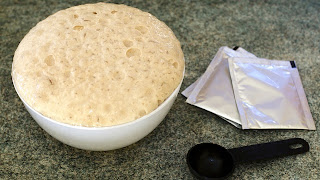
Fill an old coffee cup with ten tablespoons (150 grams) of sugar, two tablespoons (30 grams) of yeast, and one and a half quarts (one and a half liters) of water, and put it in the middle of an upturned dog bowl. Voila! You have just made a bedbug detector that beats others on the market and is much cheaper.
For clarity's sake, they're suggesting you mix everything in a container
(Note: the original experiment actually used a carved out soda bottle for this, which would make more sense than a coffee cup) and then put that container in the center of the upturned/overturned/upside down dog bowl. The CO2 reaction in the large container will attract the bugs, and when they get into the upside down dog bowl, the sloped sides will trap the bed bugs like a moat so they can't get out. According to the study (linked below) they also sprayed some adhesive on the sides of the bowl just to boost the efficacy of the trap.
In any event, the yeast eats the sugar, and releases carbon dioxide, like humans do when they exhale. It's also the gas that bed bugs use to find sleeping hosts, and they're very good at tracking carbon dioxide, even across long distances.
The trap won't kill the bed bugs, but it will catch them, and Rutgers University entomologists Narinderpal Singh, Changlu Wang, and Richard Cooper all agree that it can detect signs of an infestation early enough to be quickly and swiftly dealt with. The researchers even put their test up against the leading commercial version and found that their method was much more effective at keeping trapped bed bugs inside, so your positive result doesn't escape, leaving you to think everything's fine. You can read the whole study (or at least the abstract), in the Journal of Economic Entomology (click the PDF button to get the full version of the study), or hit the National Geographic link below for more details on how the test was developed

Bed-bugs-nestling-in-unexpected-places even in new funiture, has the van that hauled the chair been cleaned?
http://www.americanownews.com/story/15514309/study-says-bed-bugs-can-carry-bacteria
 UPDATE: New information from a study shows some bed bugs can carry drug resistant bacteria - even MRSA.
Five bed bugs were tested and experts say while they carry the superbug bacteria, they are unclear of how bed bugs got the bacteria.
Dr. Scott Mahan, an infectious disease specialist, says there hasn't been any association between the bed bugs transmitting the disease to humans.
Mahan also says while the bacteria is drug resistant, "They are resistant to the drugs we used maybe 10 or 15 years ago. That doesn't mean there aren't drugs that can work against them."
So the bottom line - try and avoid bed bugs if you can.
TRY: the dryer sheets under mattress to keep them away, and in suit cases as you travel.
http://www.cdc.gov/parasites/bedbugs/faqs.html
Here's how to make one, according to this NatGeo article:

For clarity's sake, they're suggesting you mix everything in a container
(Note: the original experiment actually used a carved out soda bottle for this, which would make more sense than a coffee cup) and then put that container in the center of the upturned/overturned/upside down dog bowl. The CO2 reaction in the large container will attract the bugs, and when they get into the upside down dog bowl, the sloped sides will trap the bed bugs like a moat so they can't get out. According to the study (linked below) they also sprayed some adhesive on the sides of the bowl just to boost the efficacy of the trap.
In any event, the yeast eats the sugar, and releases carbon dioxide, like humans do when they exhale. It's also the gas that bed bugs use to find sleeping hosts, and they're very good at tracking carbon dioxide, even across long distances.
The trap won't kill the bed bugs, but it will catch them, and Rutgers University entomologists Narinderpal Singh, Changlu Wang, and Richard Cooper all agree that it can detect signs of an infestation early enough to be quickly and swiftly dealt with. The researchers even put their test up against the leading commercial version and found that their method was much more effective at keeping trapped bed bugs inside, so your positive result doesn't escape, leaving you to think everything's fine. You can read the whole study (or at least the abstract), in the Journal of Economic Entomology (click the PDF button to get the full version of the study), or hit the National Geographic link below for more details on how the test was developed

Bed-bugs-nestling-in-unexpected-places even in new funiture, has the van that hauled the chair been cleaned?
http://www.americanownews.com/story/15514309/study-says-bed-bugs-can-carry-bacteria

Five bed bugs were tested and experts say while they carry the superbug bacteria, they are unclear of how bed bugs got the bacteria.
Dr. Scott Mahan, an infectious disease specialist, says there hasn't been any association between the bed bugs transmitting the disease to humans.
Mahan also says while the bacteria is drug resistant, "They are resistant to the drugs we used maybe 10 or 15 years ago. That doesn't mean there aren't drugs that can work against them."
So the bottom line - try and avoid bed bugs if you can.
TRY: the dryer sheets under mattress to keep them away, and in suit cases as you travel.
http://www.cdc.gov/parasites/bedbugs/faqs.html


WILD FOOD SOURCE: PRICKLEY PEAR JELLY
This will be a part of my wild food sources. I pinned this recipe on Pinterest then on my Twitter. They have excellent recipes my style of cooking and preserving. I hope you are preparing foods for bad times ahead. (PREPPERS know not to pick near the road nor where sprayed chemicals have been, and not to ruin the sight for next year. Leave the small ones and alway the roots.)This is a great site...and they are selling a book which I wish I had the money to buy.
Low Sugar Prickly Pear Jelly
4 cups prickly pear juice (requires around four pounds of fruit)
1/2 cup lemon juice
3 cups sugar
1 package low sugar pectin
1. Burn off the spines by holding the fruit over a burner on the stove for a few seconds.
2. Quarter the fruit and place in a pot. Cover with water (around 2 1/2 cups). Boil for ten minutes. Crush the fruit with a potato masher.
Update 12/5/2012: I now recommend using a food mill, though the boiling technique also works. See our post on using a food mill to juice prickly pear fruit.
3. Strain through two sheets of cheesecloth placed in a colander. Gather up the corners of the cheesecloth and give the pulp a squeeze to extract as much juice as you can.
4. Pour four cups of the prickly pear juice into a pot and add a half cup of lemon juice.
5. Mix a quarter cup of the sugar and a box of low/no sugar pectin and add to the juice.
6. Bring the mixture to a full boil.
7. Add the remaining sugar and bring back to a full boil. Boil for one minute, stirring constantly.
8. Pour into six 8 oz jars.
9. Process in a boiling water bath for ten minutes.

Prickly pear fruit (called "tuna" in Mexico) come in a variety of colors. My plants make an orange fruit that matures in August. I love the taste of the fresh fruit, but it’s a bit of an acquired taste due to the abundant seeds and the nasty spines (technically called glochids).
Unlike a lot of jelly recipes floating around the interwebs, I guarantee that this one works. It basically follows the ratios and instructions for red raspberry jelly as detailed in the Sure Jell pectin box. In my experience with jam and jelly recipes, sticking with the directions in the pectin box yields consistent results. And stay tuned for a video I shot on how to make this jelly.
Update: Green Roof Grower Bruce wrote to suggest using Pomonas Universal Pectin to reduce the sugar level of this recipe even further. I’m going to give it a try. In the meantime the folks behind Pomona’s have a very similar recipe for prickly pear jelly that uses less sugar here (pdf).
Update 8/28/2010: I tried the Pomonas Universal Pectin prickly pear jelly recipe linked to above. It works, and uses one cup less sugar than my recipe above. The color is also more vibrant due to the larger percentage of fruit. However, both Mrs. Homegrown and Homegrown Neighbor found the more gelatinous consistency of the Pomonas prickly pear jelly objectionable. Verdict: for now I’m going to stick with SureJell or equivalent.
http://www.rootsimple.com/2010/08/low-sugar-prickly-pear-jelly-recipe/ Their whole page is on Prickly Pear...joy
 |
| The comments on this page are wonderful! check them out |
Low Sugar Prickly Pear Jelly
4 cups prickly pear juice (requires around four pounds of fruit)
1/2 cup lemon juice
3 cups sugar
1 package low sugar pectin
1. Burn off the spines by holding the fruit over a burner on the stove for a few seconds.
2. Quarter the fruit and place in a pot. Cover with water (around 2 1/2 cups). Boil for ten minutes. Crush the fruit with a potato masher.
Update 12/5/2012: I now recommend using a food mill, though the boiling technique also works. See our post on using a food mill to juice prickly pear fruit.
3. Strain through two sheets of cheesecloth placed in a colander. Gather up the corners of the cheesecloth and give the pulp a squeeze to extract as much juice as you can.
4. Pour four cups of the prickly pear juice into a pot and add a half cup of lemon juice.
5. Mix a quarter cup of the sugar and a box of low/no sugar pectin and add to the juice.
6. Bring the mixture to a full boil.
7. Add the remaining sugar and bring back to a full boil. Boil for one minute, stirring constantly.
8. Pour into six 8 oz jars.
9. Process in a boiling water bath for ten minutes.
Prickly pear fruit (called "tuna" in Mexico) come in a variety of colors. My plants make an orange fruit that matures in August. I love the taste of the fresh fruit, but it’s a bit of an acquired taste due to the abundant seeds and the nasty spines (technically called glochids).
Unlike a lot of jelly recipes floating around the interwebs, I guarantee that this one works. It basically follows the ratios and instructions for red raspberry jelly as detailed in the Sure Jell pectin box. In my experience with jam and jelly recipes, sticking with the directions in the pectin box yields consistent results. And stay tuned for a video I shot on how to make this jelly.
Update: Green Roof Grower Bruce wrote to suggest using Pomonas Universal Pectin to reduce the sugar level of this recipe even further. I’m going to give it a try. In the meantime the folks behind Pomona’s have a very similar recipe for prickly pear jelly that uses less sugar here (pdf).
Update 8/28/2010: I tried the Pomonas Universal Pectin prickly pear jelly recipe linked to above. It works, and uses one cup less sugar than my recipe above. The color is also more vibrant due to the larger percentage of fruit. However, both Mrs. Homegrown and Homegrown Neighbor found the more gelatinous consistency of the Pomonas prickly pear jelly objectionable. Verdict: for now I’m going to stick with SureJell or equivalent.
http://www.rootsimple.com/2010/08/low-sugar-prickly-pear-jelly-recipe/ Their whole page is on Prickly Pear...joy
Subscribe to:
Posts (Atom)